
 LIFESTYLE
The Art of the Perfect Marbella Villa Holiday
From choosing the right property to curating every detail of your stay — the quiet art of a flawless Marbella villa holiday.
Utopia Lifestyle ·
There is a particular question that anyone who lives in Marbella, or returns to it often, eventually has to answer for friends elsewhere: why here, of all the beautiful places in Europe? Why not the Côte d'Azur, the Amalfi Coast, the Balearics, the Algarve? The honest answer takes longer than most people expect, because Marbella's case is not built on a single defining feature. It is built on the combination — the way sun, sea, mountain, culture, cuisine and a particular international rhythm all sit together in one small stretch of coast.
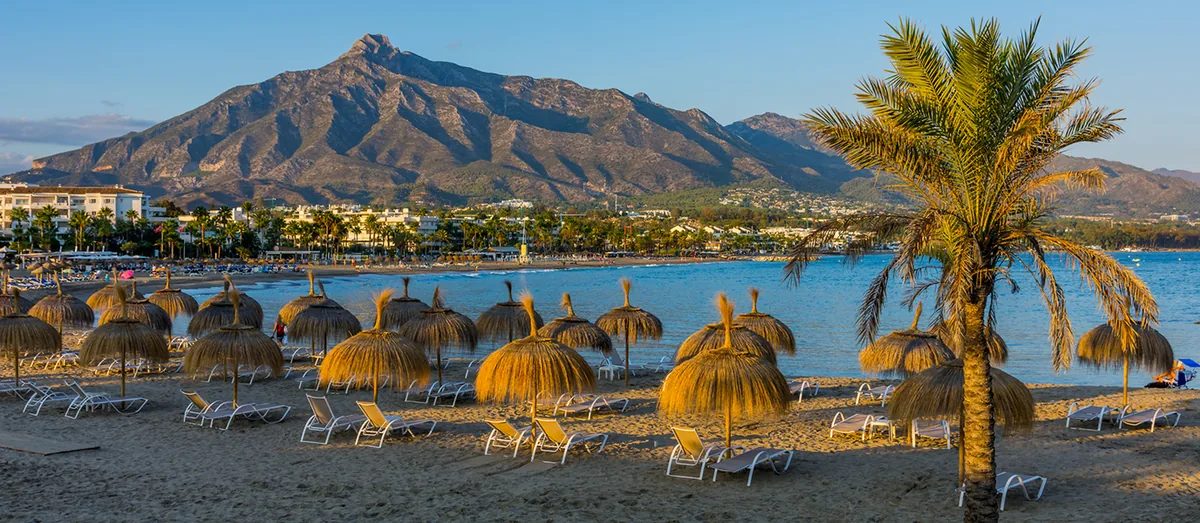
Begin with the climate. Three hundred sunny days a year is not marketing copy; it is statistical truth. Winters are mild enough that lunch outside in January is normal. Spring arrives early and stays. Summer is long, hot but manageable thanks to the proximity of the sea and the elevation of the Sierra Blanca. The shoulder seasons — May, June, September, October — are, for many residents, the real Marbella: warm enough for everything, crowded with no one. Few destinations in Europe deliver such a usable year.
Culture sits behind the surface, often missed by visitors who never leave the beach clubs. Marbella's old town is quietly beautiful — whitewashed lanes, Moorish footprints, orange trees in small plazas. Andalusian architecture across the wider region carries the layered history of Roman, Moorish and Christian Spain. The art scene, while smaller than Madrid or Barcelona, is serious. Festivals through the year — flamenco, classical music, food — give the calendar texture for those who look.
The international community is part of what makes the place unusual. Marbella has, for decades, drawn people from every corner of Europe, the Middle East, Latin America and increasingly Asia. The result is a town whose dinner conversations might pivot through five languages in a single evening, whose schools and shops and restaurants reflect a genuinely cosmopolitan mix. This is not the cosmopolitanism of a transient resort. People stay. People settle. People raise families here. That depth of community gives Marbella a stability and richness that pure resort towns lack.
Then there is the lifestyle itself, which deserves its own consideration. The day, here, has a particular shape. Early mornings are the best part of the day in summer — the sea calm, the air still cool, the light long. Long, slow lunches anchor the middle of the day. The hours between five and eight are sacred: a swim, a walk, a drink as the light turns gold over the bay. Dinner begins late and unfolds without hurry. This is not a rhythm imposed; it is a rhythm earned, refined over generations, and once you adapt to it, returning to anywhere else feels strangely brisk.
“Marbella is not loud about what it offers. It simply offers it — and the people who notice tend to keep coming back.”
Nature is always close. The Sierra Blanca rises directly behind the town, offering hiking, riding and a perspective on the coast that resets you every time. The Mediterranean is, of course, always there. Within an hour you can be in Ronda's mountain landscapes; within two, in Granada or Cádiz. Marbella is not a destination you have to leave to find variety. The variety is on the doorstep.
Food is its own argument. Andalusian cuisine — fresh fish, ham, olive oil, simple preparations done extremely well — sits alongside some of the most ambitious modern restaurants in southern Europe. Wine culture is serious, with strong representation from Rioja, Ribera del Duero and the increasingly impressive Andalusian and Mallorcan producers. The tapas tradition still lives in the small bars of the old town, while the Golden Mile delivers fine dining of genuine international standard.
Sport and movement are everywhere. Golf, of course — Marbella and the wider Costa del Sol have one of the highest concentrations of quality courses in Europe. Padel, in its current cultural ascent, is woven into daily life. Sailing, paddleboarding, hiking, cycling, riding. The infrastructure for an active life is exceptional, and the climate makes it usable almost year-round.
And then there are the people. There is a quiet, specific quality to the people who make Marbella their home or their regular escape — international, often discreet, often successful, generally interested in a life well lived rather than a life loudly displayed. The conversations are good. The friendships are real. The community, once you are in it, is generous.
This is why Marbella is not a holiday destination so much as a complete way of living for a week, a month or a chapter of life. Few places in Europe can match the combination — and once you know the rhythm, very few alternatives compete. At Utopia Lifestyle, we are quietly proud to introduce this Marbella, in all its depth, to the people lucky enough to discover it.
LIFESTYLEFrom choosing the right property to curating every detail of your stay — the quiet art of a flawless Marbella villa holiday.
 LIFESTYLE
Sunset dinners, beach clubs and the long, slow drift from cocktail hour to candlelit midnight — the Marbella that begins after seven.